

Last updated: November 2026
When a tenant falls behind on rent, most Spokane owners know the first step. You serve the state's 14 day notice to pay rent or vacate, and if the balance is still unpaid when the notice runs out, you can start the eviction process. For rentals inside Spokane city limits, that process got longer this year.
Since June 1, 2026, the City of Spokane has required landlords to give tenants a city notice at several points in a tenancy and to go through an eviction prevention process before filing in court for unpaid rent. Skipping those steps can give the tenant a defense. A case that gets dismissed costs far more time and money than the 30 days you were trying to save.
The timing matters. RANGE Media reported that notices served on tenants ahead of eviction in Spokane County ran at about three times the usual pace in August, after the fires, and winter is when late rent tends to pick up. If you own a rental in the city and have not been through the new process yet, now is a good time to learn it.
What the Ordinance Covers
The Pathways to Eviction Prevention ordinance, C36808, is codified at SMC 10.57.230 and run by the City's Housing and Homeless Services Department. It applies to residential evictions for unpaid rent inside City of Spokane limits, including mobile and manufactured home tenancies. Rentals in Spokane Valley, Liberty Lake, Airway Heights and unincorporated parts of the county are not covered. A Spokane mailing address does not always mean a property is inside city limits, so check the parcel if you are unsure.
The program is free, and it does not cancel any rent the tenant owes or stop an eviction. It sets up a window of up to 30 days, before any case can be filed, for the tenant to apply for rental assistance, work out a payment plan or find another way to settle the balance.
When You Have to Give the City's Notice
The ordinance requires the City's Eviction Prevention Resources Notice at five points in a tenancy, and only one of them involves late rent:
- At lease signing or the start of a tenancy
- With every lease renewal
- With any rent increase notice
- With a 14 day notice to pay rent or vacate
- Before you ask a tenant to sign a mutual termination agreement
The notice is also required in the situations that are exempt from the 30 day process, which we cover below. The City has updated the form since the program started, so download the current version from the City's page for landlords each time instead of reusing an old copy from your files.
The Steps Before Filing for Unpaid Rent
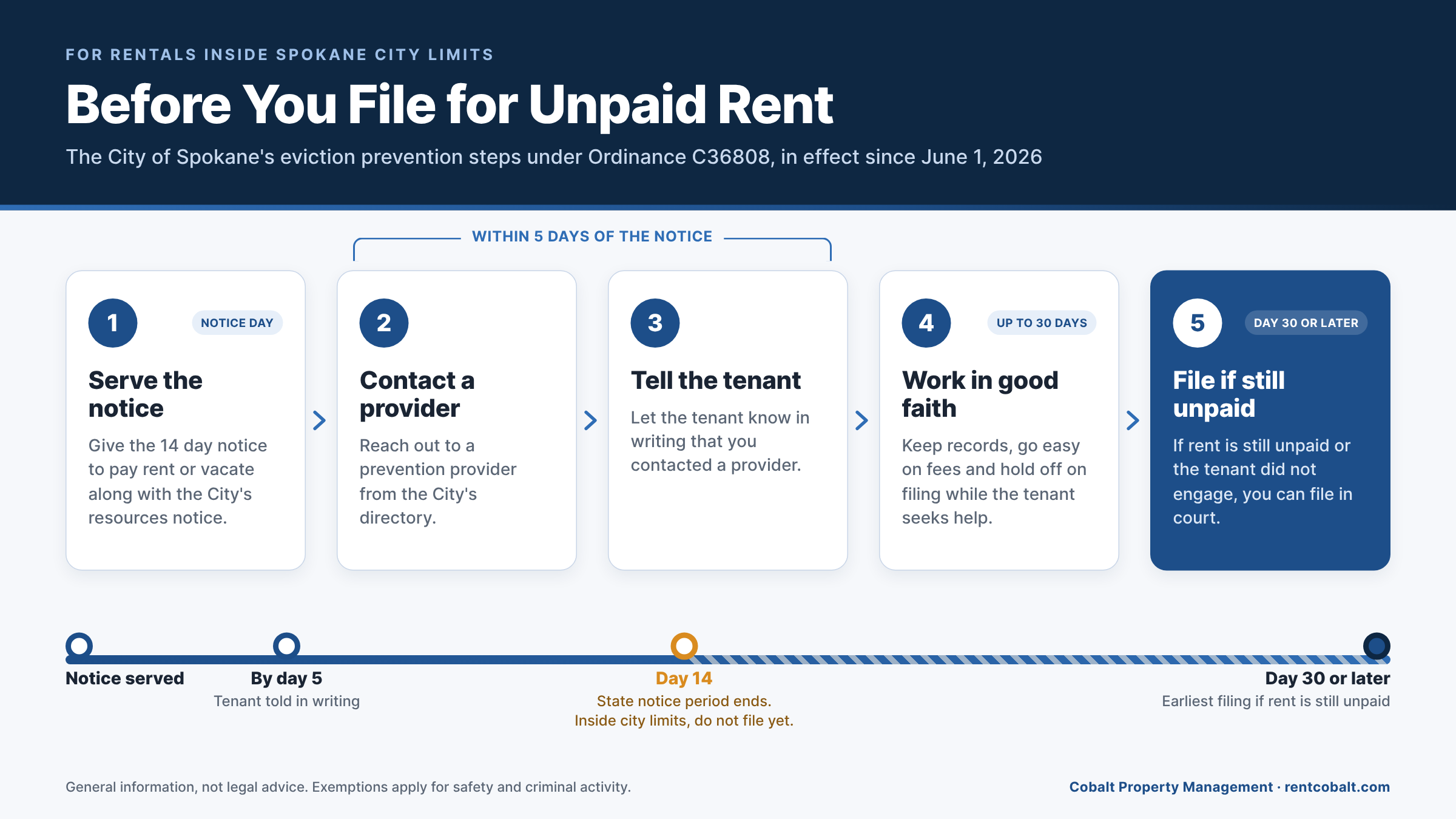
Once a tenant falls behind, the City lays out this sequence:
- Serve the 14 day notice to pay rent or vacate, and give the tenant the City's resources notice at the same time.
- Contact a prevention provider from the City's provider directory.
- Within five days of the notice, tell the tenant in writing that you contacted a provider.
- Take part in the process in good faith for up to 30 days.
- If the rent is still unpaid at the end of that window, or the tenant did not engage, you can file in court.
According to the City's FAQ, if a tenant refuses to take part, you should document your outreach and still wait out the full 30 day window before filing. For a rental inside city limits, plan on at least a month between the notice to pay or vacate and any court filing, rather than the 14 days you may be used to.
What Counts as Good Faith
You are not required to agree to any particular outcome. The City describes participation as keeping timely records, not filing during the 30 day window, cooperating with the timelines for rental assistance, being willing to resolve the issue, showing restraint on fees and not retaliating against the tenant.
The last two are where owners can slip up without meaning to. Adding late fees to the balance while the tenant is working with a provider, or serving a notice to end the tenancy for some other reason in the middle of the window, can look like the opposite of good faith if the case ever goes before a judge.
Exemptions
You do not have to go through the 30 day process when:
- The tenant's behavior seriously affects their own health and safety or someone else's
- An eviction is needed to stop an immediate threat of harm or harassment
- The tenant was arrested for criminal activity on the property
The City's resources notice still has to be given in those cases. Also keep in mind that the ordinance only deals with evictions for unpaid rent. Ending a tenancy for any other reason still follows state law, which limits the reasons a landlord can use.
Mistakes We Would Watch For
Most of the problems we expect with this ordinance will come from habits built under the old process:
- Serving the 14 day notice without the City's resources notice, or with an outdated version of the form
- Contacting a provider but never telling the tenant in writing within five days
- Filing as soon as the 14 days run out
- Not keeping records of each contact, including dates, emails and copies of letters
One more item is easy to overlook. Since November 15, 2024, landlords inside city limits who do not have a business license or have not registered their rentals with the City are limited in their ability to evict or raise rent, under Ordinance C36576. Confirm your registration is current before you ever need to rely on it.
How This Changes the Math on Late Rent
An extra month between the first notice and a court filing adds up. On a $1,600 rental, that can mean another month of unpaid rent on top of what is already owed. It is a good reason to act on late rent quickly and to take the assistance side of the process seriously. If a provider can get part of the balance paid, or help set up a payment plan the tenant can actually keep, that is often a better result for the owner than an eviction followed by a vacancy. Our post on the real cost of rental vacancy walks through what a turnover costs in Spokane.
Need Help With a Tenant Who Is Behind on Rent?
For the owners we manage, we track these notices and timelines, and our eviction protection covers the cost of a simple uncontested eviction, with some restrictions. If you manage your own rental and have a tenant falling behind, or want your notices and lease packet checked against the new rules, reach out to Doc and the team at 509.795.1031 or request a free management quote. For the other rule changes coming in January, see our checklist of new landlord rules for 2027.
This article is general information for rental owners in the Spokane area and is not legal advice. Laws and local rules change, so talk with a Washington attorney who handles landlord and tenant law about your situation.
