

Last updated: November 2026
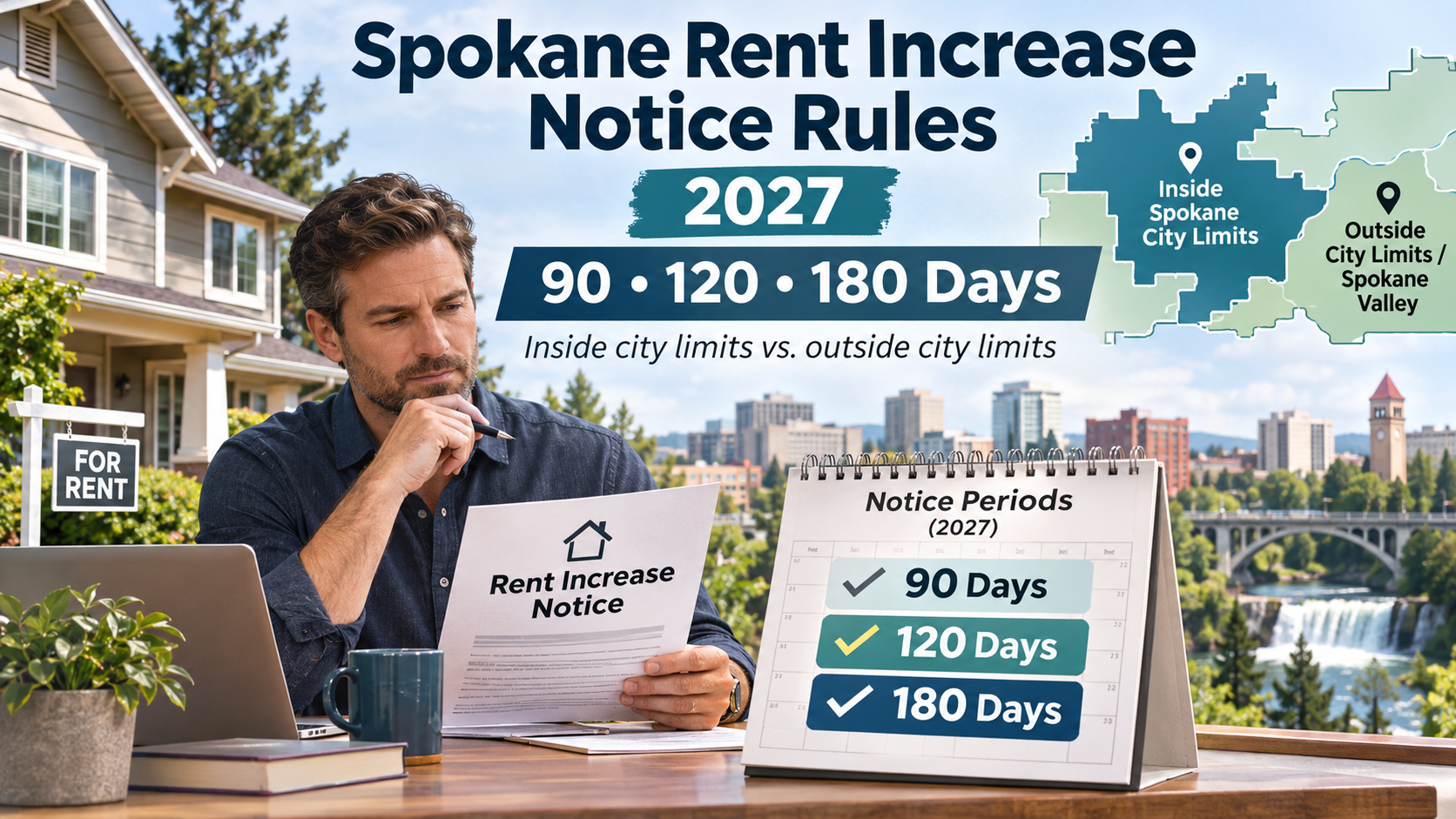
It depends on where the property is and how much the rent is going up. Inside Spokane city limits, you need 120 days of written notice for an increase of 3% or less and 180 days for anything above 3%. Outside the city, including Spokane Valley, Washington's 90 day minimum is the rule to plan around. Tenancies where rent is based on the tenant's income have a shorter 30 day rule.
This is one of the most common questions we hear from owners who manage their own rentals, and the answer has changed more than once since 2024. Below are the state rules, the city rules, and a calendar for 2027 renewals.
The State Rules That Apply Everywhere in Washington
Every Washington landlord starts from the same baseline under state law and HB 1217, which took effect in May 2025:
- At least 90 days of written notice before an increase takes effect, under RCW 59.18.140
- For a lease with a fixed term, the increase cannot take effect until the term ends
- No increase at all during the first 12 months of a tenancy
- A cap on increases over any 12 month period, which is 9.683% for 2026 and 10% for increases taking effect in 2027
- Notice language that follows HB 1217, using the standard rent and fee increase notice rather than a letter you write yourself
Some properties are exempt from the cap, including buildings within 12 years of their first certificate of occupancy, certain owner occupied small multifamily buildings and some nonprofit and tax credit housing. An exemption from the cap does not remove the notice requirement. The notice still has to go out on time, and it has to explain why the property is exempt. Our post on the Spokane rent cap for 2027 covers how the cap is calculated.
The City of Spokane Rule
The City adopted its own notice periods in 2024 under SMC 10.57.160, and they apply on top of the state rules for rental agreements entered into or renewed since the rule took effect that June. For a rental inside city limits:
- 120 days of written notice for an increase of 3% or less
- 180 days of written notice for an increase of more than 3%
- 30 days for a subsidized tenancy where rent is based on the tenant's income or household circumstances
The notice has to state the percentage of the increase, the new rent amount and the date it takes effect, and it has to be served in one of the ways state law allows under RCW 59.12.040. The state cap still applies inside the city. The longer notice period is in addition to it.
Where the 3% Line Falls
The percentage is measured against the current rent. On a home renting for $1,800, 3% works out to $54. Raising the rent to $1,850 is about a 2.8% increase and needs 120 days of notice. Raising it to $1,900 is about 5.6% and needs 180. The City uses the state's definition of rent, which covers recurring charges listed in the lease and does not include one time charges such as late fees.
Two Other City Requirements That Come With a Rent Increase
Since June 1, 2026, any rent increase notice on a city rental also has to include the City's eviction prevention resources notice. We explain that ordinance in our guide to Spokane's eviction prevention rules.
The City also requires a business license and rental registration for residential rentals. Since November 15, 2024, landlords who are not registered are limited in their ability to raise rent or evict, under Ordinance C36576. Confirm your registration is current before you send a notice.
Is Your Rental Inside City Limits?
A Spokane mailing address does not settle the question. Spokane Valley, Liberty Lake, Airway Heights, Cheney, Medical Lake, Millwood and Deer Park are separate cities, and large unincorporated areas north and west of the city still use Spokane mailing addresses. Outside the City of Spokane, plan around the state's 90 day rule, but confirm with the city where the rental sits before you serve notice.
If you are not sure which side of the line a property is on, look up the parcel on Spokane County's SCOUT map or call the City of Spokane.
A Calendar for 2027 Increases
These are the latest dates to serve notice for an increase that starts on the first of the month. Add at least a week for weekends and mailing time. If a date in the table has already passed, that start date is no longer an option for that type of increase.
Increase takes effect | State rule (90 days) | City, 3% or less (120 days) | City, over 3% (180 days) |
March 1, 2027 | Dec 1, 2026 | Nov 1, 2026 | Sep 2, 2026 |
April 1, 2027 | Jan 1, 2027 | Dec 2, 2026 | Oct 3, 2026 |
May 1, 2027 | Jan 31, 2027 | Jan 1, 2027 | Nov 2, 2026 |
June 1, 2027 | Mar 3, 2027 | Feb 1, 2027 | Dec 3, 2026 |
July 1, 2027 | Apr 2, 2027 | Mar 3, 2027 | Jan 2, 2027 |
August 1, 2027 | May 3, 2027 | Apr 3, 2027 | Feb 2, 2027 |
September 1, 2027 | Jun 3, 2027 | May 4, 2027 | Mar 5, 2027 |
October 1, 2027 | Jul 3, 2027 | Jun 3, 2027 | Apr 4, 2027 |
For a city rental, an increase above 3% that starts on May 1 or earlier needed notice by early November, so that window has closed for most spring renewals. Six month leases inside city limits deserve a closer look too. A 180 day notice has to go out at roughly the same time the lease begins.
Two Examples
A duplex in Spokane Valley rents for $1,400 a side, and the lease on one unit ends May 31, 2027. The tenant has been there for two years. The owner wants to raise the rent 5% to $1,470 starting June 1. Under the state's 90 day rule, the notice has to be served by March 3, 2027.
A house inside city limits on the north side rents for $1,800, and the lease ends June 30, 2027. This tenant has also been in place for more than a year. To raise the rent to $1,850 on July 1, the owner needs 120 days of notice, which means serving it by March 3, 2027. To raise it to $1,900 instead, the owner needs 180 days and has to serve it by January 2, 2027.
What Happens If the Notice Is Late or Wrong
If a notice goes out late or leaves out required information, do not treat the increase as starting on the original date. Serve a corrected notice with a later effective date instead of trying to enforce the first one.
Mistakes here can be expensive. Under HB 1217, a tenant can demand that an unlawful increase be reduced and can recover any excess rent paid, damages of up to three months of the unlawful rent, and attorney fees. The Attorney General can also seek civil penalties of up to $7,500 per violation. The City's rental rules give tenants a private right of action as well.
Tenants also have an option owners sometimes forget. Under state law, a tenant can end the rental agreement before an increase takes effect by giving at least 20 days of written notice. A large increase can turn into a vacancy, so weigh the new rent against what an empty month would cost. Our post on the real cost of rental vacancy has the numbers for a typical Spokane rental.
What About North Idaho?
If you also own in Coeur d'Alene or Post Falls, the rules are simpler. Idaho law requires at least 30 days of written notice for a residential rent increase, there is no statewide cap, and Idaho cities are not allowed to adopt rent control. Our comparison of Washington and Idaho landlord laws covers the other differences.
Get Your 2027 Renewals Lined Up
If you manage your own rentals and would like someone to check your renewal dates and notices, reach out to Doc and the team at 509.795.1031 or request a free management quote. For the other changes coming in January, including the 10% cap and the new flood and smart lock disclosures, see our checklist of new landlord rules for 2027.
This article is general information for rental owners in the Spokane area and is not legal advice. Laws and local rules change, so talk with a Washington attorney who handles landlord and tenant law about your situation.
