

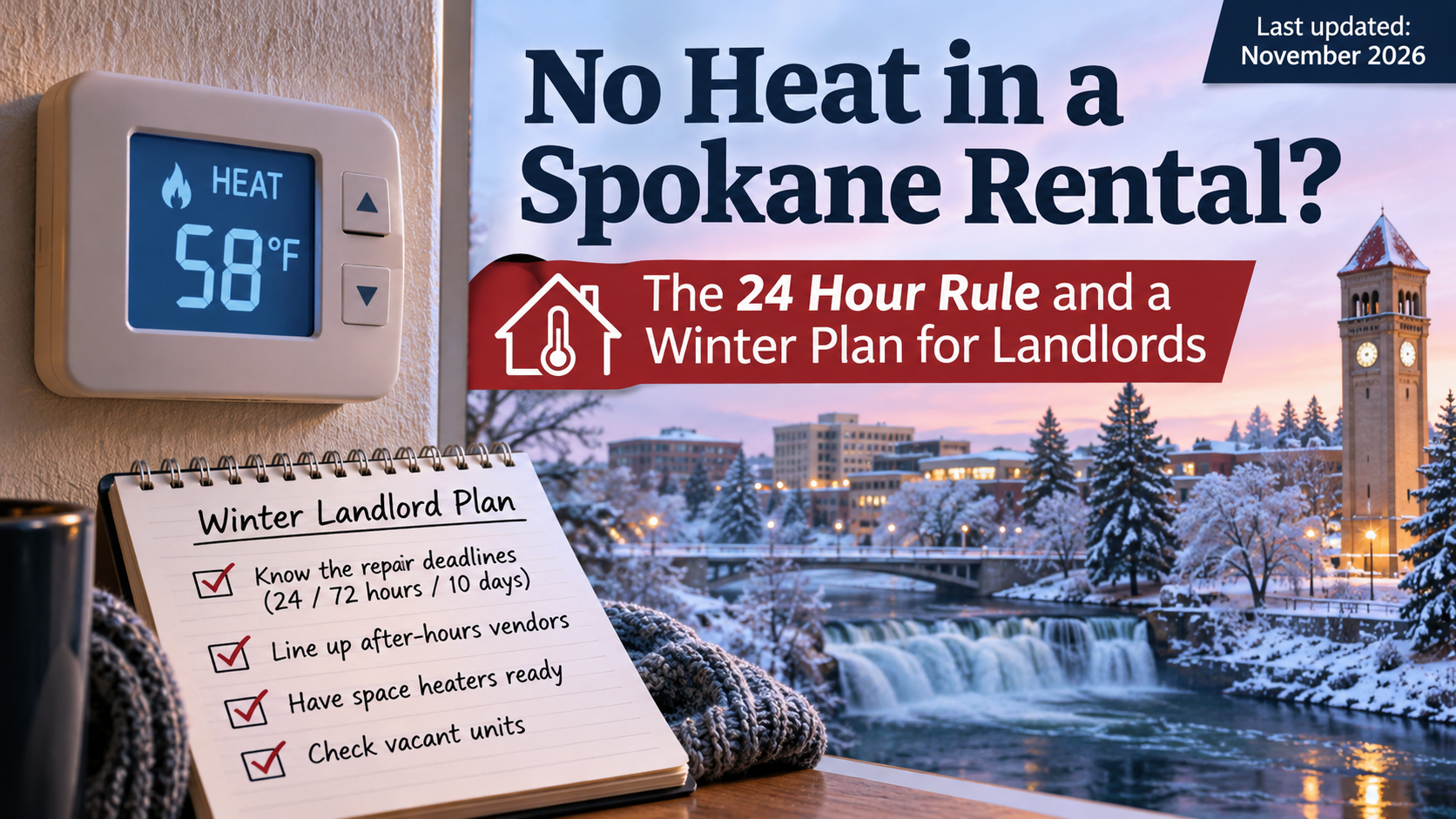
Last updated: November 2026
The first hard freeze of the year has a way of finding every tired furnace in Spokane. A tenant calls at ten at night to say the house is getting cold, and the owner is either out of town or has no idea which heating company to call. That call comes with a legal deadline attached.
Washington law sets specific timelines for when a landlord has to start repairs, and the shortest one applies to exactly the kind of problem winter brings. Below is what the law requires, what tenants can do if a deadline is missed, and what we would put in place before the next cold snap.
The Three Repair Deadlines
Under RCW 59.18.070, once a landlord receives written notice of a problem, the landlord has to begin repairs within:
24 hours when the tenant has no heat, no hot or cold water, no electricity, or there is a condition that is an immediate danger to life
72 hours when the tenant cannot use a refrigerator, range and oven, or major plumbing fixture that the landlord supplied
10 days for everything else
These are deadlines to start the work, not to finish it. A furnace that needs a part on backorder can take longer to fix, and the law allows for delays that are truly outside the landlord's control. Waiting until Monday to make the first call is not that kind of delay.
Do Not Wait for a Letter
The clock runs from the tenant's written notice, but a text or a late night phone call about a cold house deserves the same response. If you hold off until something arrives in writing, you lose time you will want back, and it will be hard to explain later why you waited. Reply in writing as soon as you can with what you are doing and when, and keep a record of every call to your vendor.
What Tenants Can Do If the Deadline Passes
If repairs do not start in time, Washington law gives tenants several remedies, as long as they are current on rent. They can:
End the tenancy by giving written notice
Ask a court to reduce the rent for the time the problem went unrepaired
Hire a licensed contractor and deduct the cost from rent after giving the landlord a good faith estimate, up to two months' rent per repair and no more than two months' rent in any 12 month period, under RCW 59.18.100
Make a smaller repair themselves and deduct up to one month's rent, with a one month limit over any 12 months
In serious cases that the local government certifies, pay rent into an escrow account instead of to the landlord
Washington also bars retaliating against a tenant for using these remedies. For an owner, the cheapest outcome is usually the one where your own vendor gets there first. An emergency furnace call that a tenant arranges at after hours rates and then deducts from rent is rarely a bargain.
Line Up Vendors Before You Need Them
The coldest nights are when furnaces fail and when every heating company in town is busiest. A few phone calls this month can save you a long night in January. At a minimum, we would have:
A heating company that takes after hours calls, plus a second one in case the first is booked
A plumber who handles frozen pipes and water heater failures
An electrician
A plan for getting space heaters to the home quickly if a repair will take more than a day
Make sure your tenants know who to call after hours, what counts as an emergency, and where the main water shutoff is. A tenant who can shut off the water in two minutes can save you a ceiling and a floor.
Space Heaters While You Wait for a Part
If a repair will take a day or two, dropping off space heaters keeps the home livable and shows the tenant you are taking the problem seriously. It does not replace the repair. Choose heaters with automatic tip over and overheat shutoff, and remind tenants to plug them straight into the wall rather than into an extension cord.
Do Not Forget Vacant Units
An empty house in January can freeze faster than most owners expect. Keep the heat on at a steady temperature, have someone walk through regularly, and read the vacancy terms in your insurance policy. Some policies limit coverage once a home has been empty for a set period, and a burst pipe that nobody notices for a week can turn into a very large claim.
If your tenants pay Avista directly, make sure service moves back to you when they move out so the heat is not shut off between tenants. Avista has billing options for rental property owners, and a quick call will confirm how move outs are handled on your account.
Our post on five winter inspections covers the maintenance side of getting a rental ready for the season.
Need Help With Winter Repairs?
Handling repair requests and coordinating vendors is part of the maintenance services we provide for the owners we work with. If you manage your rental from out of town, or you would rather not be the one answering the phone on the coldest night of the year, reach out to Doc and the team at 509.795.1031 or request a free management quote. Our guide to managing a Spokane rental from out of state covers what else to have in place.
This article is general information for rental owners in the Spokane area and is not legal advice. Laws and local rules change, so talk with a Washington attorney who handles landlord and tenant law about your situation.
